IChingAsk
Deciphering the Code of Changes
"What is on your mind?"
Focus on your question. When you are ready to receive guidance from the ancient wisdom...
Your Path
Your path is unwritten.
Start your first ask.
The Wisdom
The Three Meanings of Yi
The Yijing (I Ching) is more than divination. The character 易 (Yi) carries three layered meanings.
Unchanging Truth
不易 | Bù Yì
Within change, the pattern endures: the Way is the constant alternation of yin and yang.
"一阴一阳之谓道"
The alternation of yin and yang is called the Way
Simplicity
简易 | Jiǎn Yì
Complexity emerges from simple relations; clarity comes from simplicity.
"易简而天下之理得矣"
Through simplicity, the principles of the world are grasped
Principles of Ask
Sincerity
Approach with a clear, honest mind. The oracle reflects the state of the inquirer.
Respect
Treat the process with solemnity. It is a dialogue with the collective unconscious.
No Repetition
Do not ask the same question twice out of doubt. Trust the first response.
The Four Virtues
The Eight Trigrams (Bagua)
The Lineage
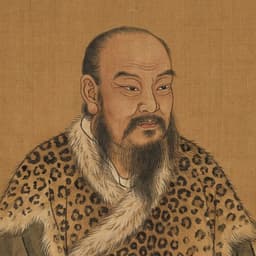
Fu Xi
Trigram Originator
c. 3rd millennium BCE
In tradition, Fu Xi is said to have revealed the eight trigrams (Bagua), forming an early symbolic language of the cosmos.
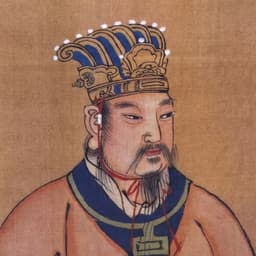
King Wen
Hexagram Sequencer
c. 12th–11th century BCE
Tradition credits King Wen with arranging the 64-hexagram sequence and shaping the core Judgments.
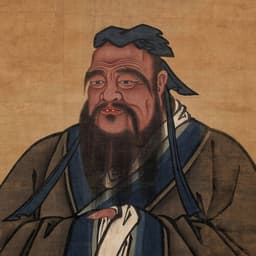
Confucius
Ten Wings Commentator
c. 6th–5th century BCE
The Ten Wings commentaries are traditionally linked to Confucius and his school, elevating the text into a philosophical classic.